The Complete Guide to RV and Motorhome Transport
Recreational vehicles and motorhomes are more than just vehicles — they’re homes on wheels, filled with memories, comfort, and adventure. Whether relocating, selling, or preparing for a cross-country trip, transporting an RV or motorhome requires careful planning and professional handling. This guide explains everything needed to ensure a smooth, safe, and stress-free transport experience.
1. Understanding RV and Motorhome Transport
RV transport involves moving recreational vehicles from one location to another using specialized equipment and experienced drivers. Depending on the size and type of RV, transport can be done using flatbed trailers, tow-away services, or drive-away options.
Common types of RVs we transport:
- Travel trailers
- Fifth wheels
- Class A, B, and C motorhomes
- Camper vans
- Toy haulers and pop-up campers
Each type requires specific handling, and professional carriers ensure the right method is used for safe delivery.
2. Choosing the Right Transport Method
The best transport option depends on the RV’s size, weight, and condition.
a. Tow-Away Service
Used for towable RVs like travel trailers and fifth wheels. The transporter uses a heavy-duty truck to tow the RV directly to its destination.
b. Flatbed or Lowboy Trailer
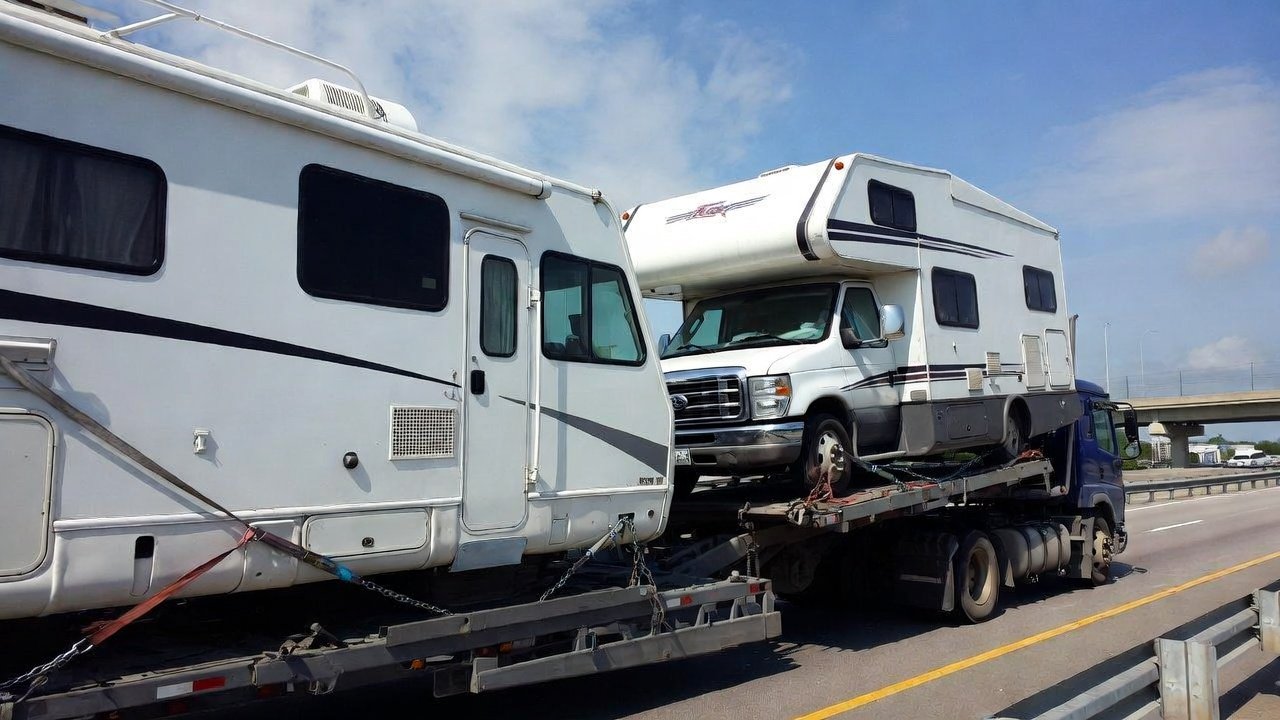
Ideal for non-operational or oversized RVs. The entire unit is loaded onto a trailer for maximum safety and stability.
c. Drive-Away Service
For motorhomes that can be driven, a professional driver operates the vehicle to its destination. This is often the fastest and most cost-effective option.
3. Preparing an RV for Transport
Proper preparation ensures safety and prevents damage during transit.
Before pickup:
- Empty water, fuel, and waste tanks.
- Disconnect propane tanks and power sources.
- Secure or remove loose items inside cabinets and drawers.
- Close and lock all windows, doors, and slide-outs.
- Check tire pressure and battery charge.
- Document the RV’s condition with photos.
A well-prepared RV travels more safely and arrives ready for use.
4. Understanding Costs and Factors
Several factors influence the cost of RV transport:
- Distance between pickup and delivery points
- Size, weight, and type of RV
- Transport method (tow-away, flatbed, or drive-away)
- Season and route conditions
- Insurance coverage and additional services
At Prime Transport Cargo Logistics, transparent pricing ensures no hidden fees — every quote includes insurance, route planning, and professional handling.
5. Insurance and Safety
Insurance is essential for peace of mind. Every RV transported by Prime Transport Cargo Logistics is fully insured from pickup to delivery. Our team performs detailed inspections before and after transport, ensuring complete accountability and protection.
Safety is our top priority. We use modern equipment, secure tie-down systems, and experienced drivers who specialize in handling large vehicles.
6. Tracking and Communication
Throughout the journey, clients receive real-time updates and tracking information. Our dispatch team monitors every route, ensuring timely delivery and immediate communication in case of delays or route changes.
7. Delivery and Inspection
Upon arrival, the driver performs a final inspection with the client to confirm the RV’s condition. Any notes from the pre-transport inspection are reviewed to ensure everything matches perfectly.
8. Why Choose Prime Transport Cargo Logistics
- Expertise in RV and motorhome transport
- Fully insured and licensed operations
- Nationwide and cross-border coverage
- Personalized service and transparent communication
- Professional drivers with years of experience
Every RV is handled with care, precision, and respect — because we understand it’s more than a vehicle; it’s part of your lifestyle.
Final Thoughts
Transporting an RV or motorhome doesn’t have to be complicated. With the right preparation and a trusted logistics partner, the process can be smooth, safe, and worry-free.